
Oh Canada...Tariffs?
Considering the Trade-Offs of Tariffs on Canada

You might be forgiven if you thought that Donald Trump was sworn in as President the day after his comeback win in the November 2024 elections. Trump is not afraid to make a splash. Shortly after his win, yet before assuming office, Trump warned that he would impose a 25% tariff on Canada and Mexico if they didn’t help him secure the US’s borders. Border security was Trump’s number one campaign promise, and it resonated with a wide swath of voters who handed him back the keys to the White House. Those tariff threats sent Canadian politicians scrambling to make the trek down to Trump’s Florida’ golf course to negotiate with him on literally, his home turf. Meetings occurred between Trump and Trudeau in November and more recently between Trump and Alberta’s Premier Danielle Smith. And complicating the negotiations is the fact that Trudeau’s support collapsed and he… well…announced his resignation. On the national level, there is - more or less - an empty seat at the negotiations table.
Trump using tariffs to get border security concessions is nothing new. Back in 2019 (during his first term), the Trump White House made this press release.
“All the hysteria over President Trump’s latest tariff threat to Mexico proved wrong Friday, as the two sides reached a deal that gave Trump what he’d demanded: much more vigorous cooperation in stopping illegal Central American migrants from travelling 1,200-plus miles across Mexico to sneak into the United States.”
And now fast forward to the present. Trump was sworn in on January 20 to his second (non-consecutive) term. Later that day, the world watched as Trump signed executive orders in the Capital One Arena, in front of thousands of enthusiastic supporters. Yet Trump didn’t immediately impose a 25% tariff Day 1. As it stands, he’s publicly stated “I think we’ll do it Feb. 1.”
Trump very well might use this as leverage to get cooperation from both Canada and Mexico on border security and help crack down on the flow of fentanyl. If he gets concessions, the tariffs might not be imposed, or they might be delayed or modified. However, in this article we’ll explore two main questions:
What are some trade-offs if Trump imposes tariffs on Canadian energy exports to the US?
Can the US simply drill more American oil and stop importing Canadian oil?
Before we start, I must point out that this is NOT investment advice. The following is only my opinion.
Canada is a major oil producer, supplying the US with over 4 million barrels of petroleum a day. In fact, Canada supplies the majority of US imports. Over the years, increased US production and Canadian imports displaced much of OPEC’s oil supplies to the US.
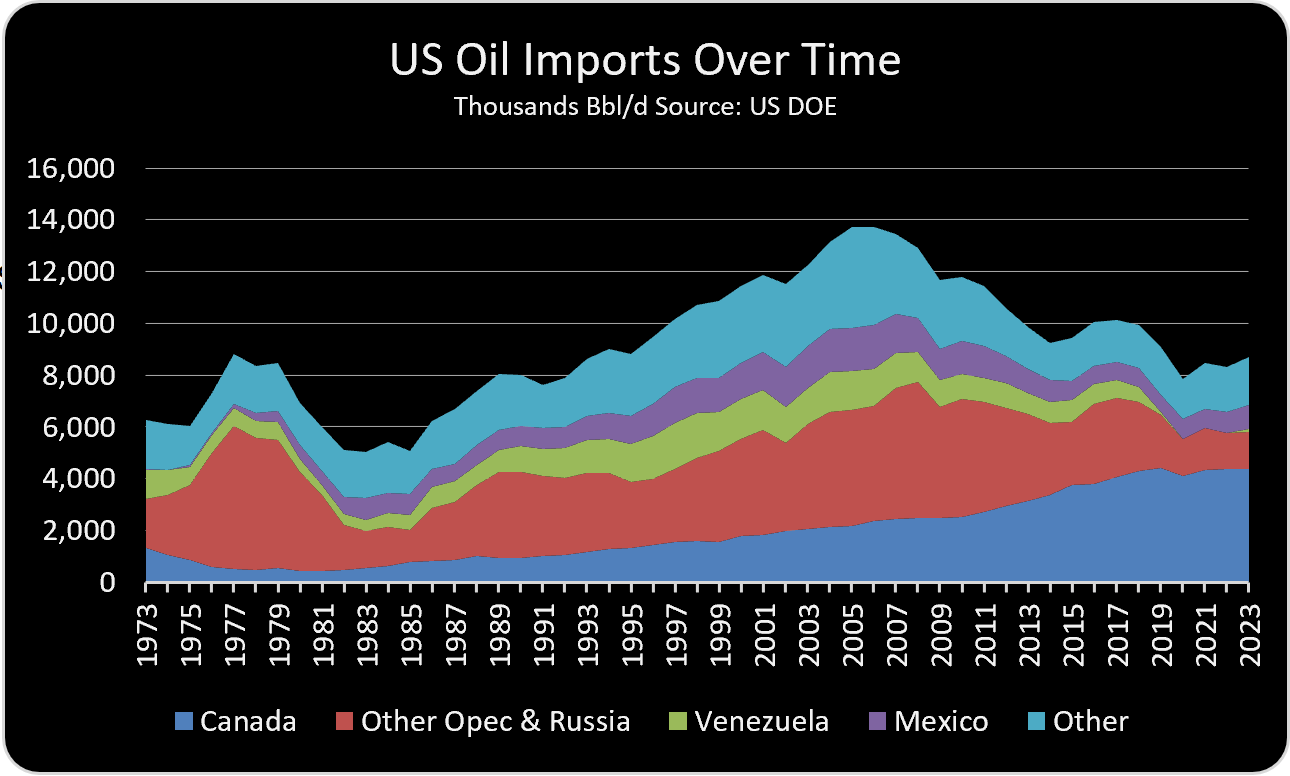
Yes, the US produces a lot of oil. Yet, there are reasons why the U.S. still imports Canadian oil.
First, Canada doesn’t have any major oil pipelines that run west to east. For oil to get from Alberta to Quebec, it has to go either by rail or take a pipeline route down to the US and then back up into Canada. (Map from the CER).
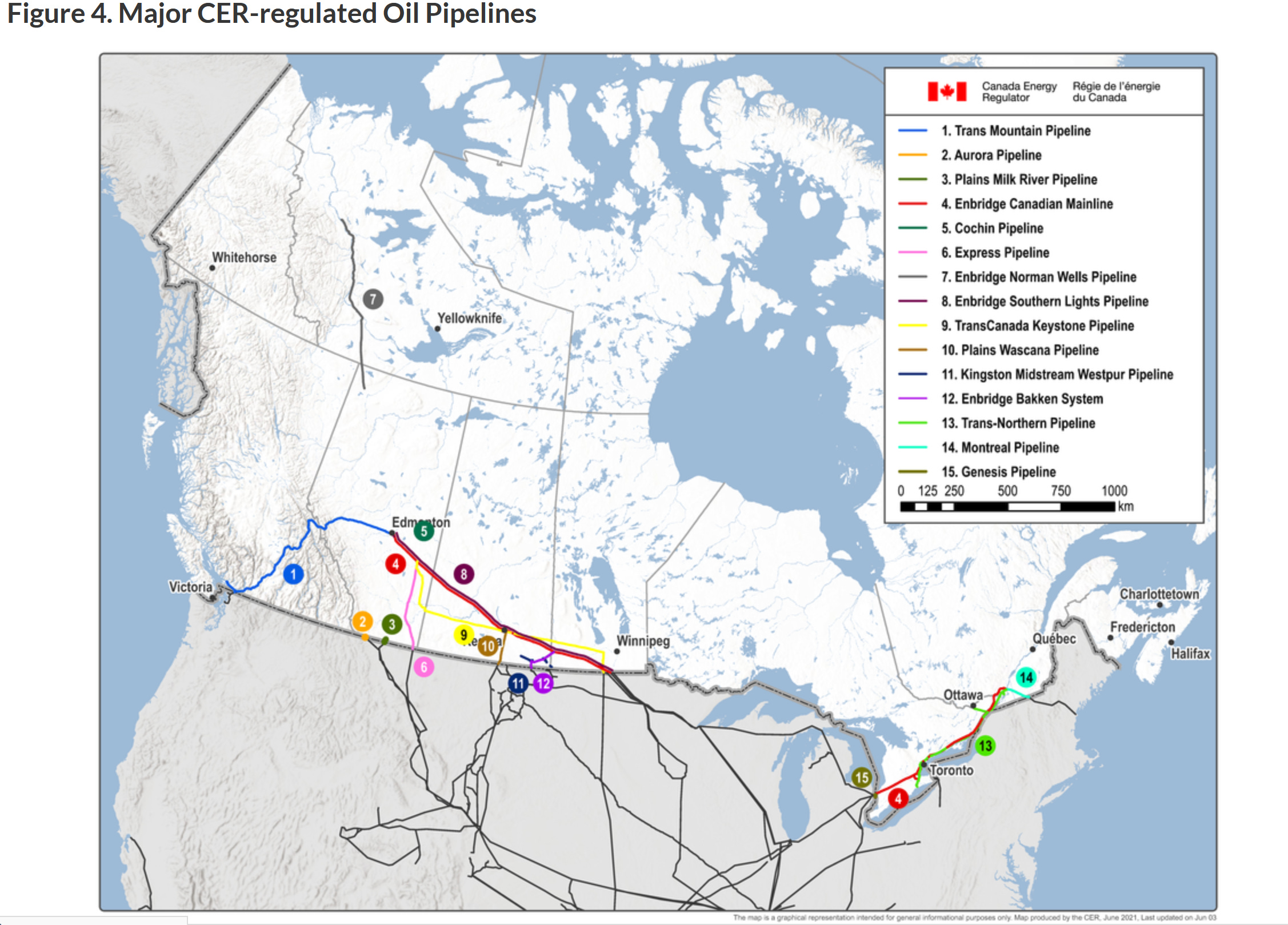
So, effectively, the US is a highway for Canadian oil going from one part of Canada to another part. This of course, worries Canadians that might have to pay US tariffs just to ship oil from Western Canada, through the US, and back to Eastern Canada.
Just over 10 years ago, there was a proposal to convert a gas pipeline and build additional crude pipelines to build a giant west-to-east oil system, bypassing the round trip to the states and back up to Canada. Here’s a map of it from Eshko Timiou:
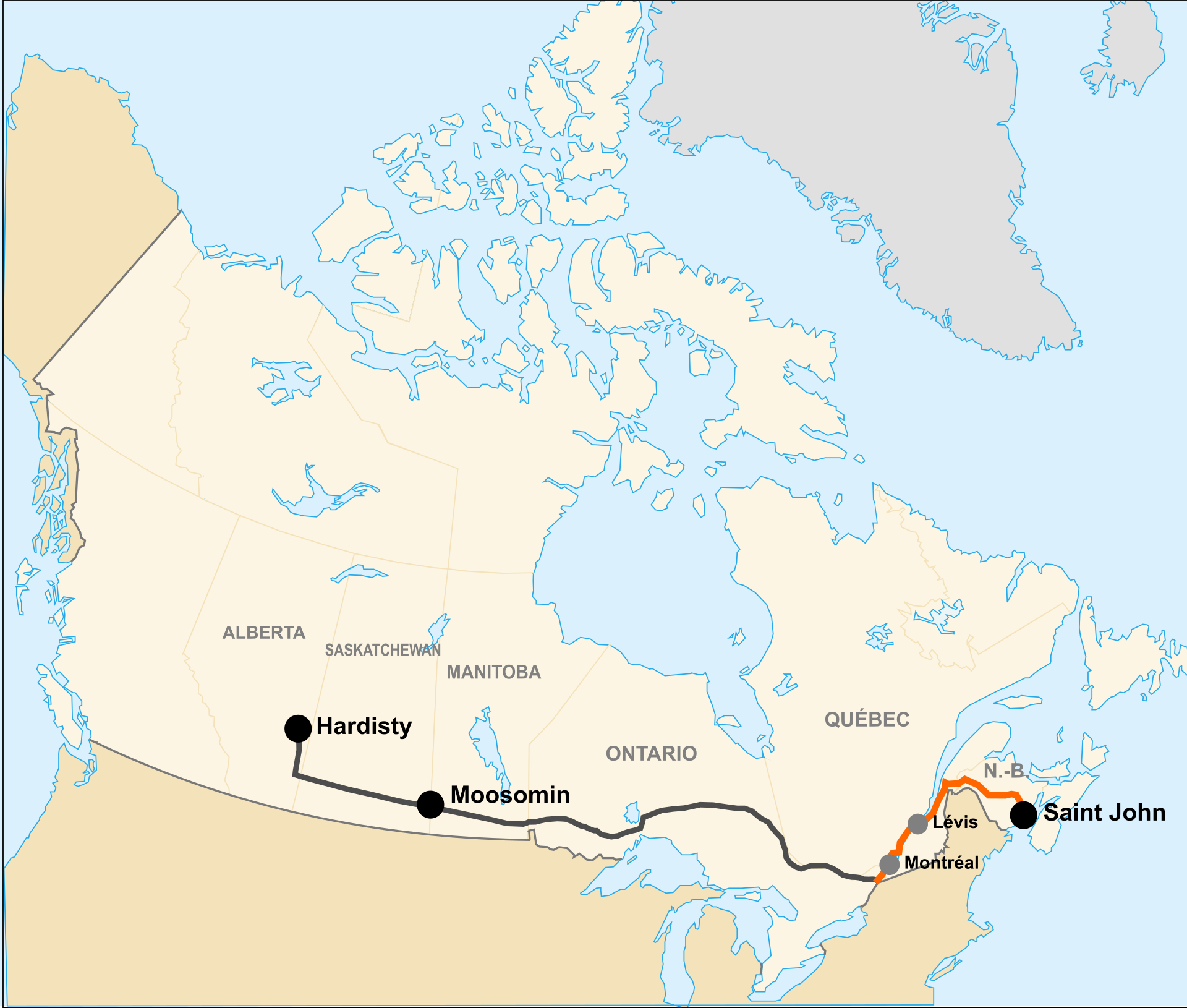
Of course, you could go ahead and guess what kind of objections environmentalists made to the pipeline. And in 2017, TransCanada cancelled the project, sending that idea of an west-east pipeline into the dust-bin.
But it’s not just an west-east pipeline. Oil travels to the US and gets refined before some of it is shipped back up into Canada. Instead of energy independence, it is what Robert Bryce calls energy inter-dependence.
Here’s the second point: Pipelines are a bit like one-way streets. Most of the Midwest refineries were largely built around pipeline infrastructure that brings Canadian oil down to the US.
In fact, in 2023 Midwest refineries got ~62% of their oil from Canada. And Canada is the ONLY foreign supplier to the Midwest. Once that oil is refined, it’s shipped out of those refineries on more “one-way-streets to consumers.” Trying to rearrange the pipeline network to bring 2.5 to 3 million barrels of oil up from places like Texas to the Midwest to replace oil that flowed down from Canada would be a massive and expensive undertaking. You might as well re-arrange the one way streets in a major city.

This brings us to a third key point: there are different crude grades, and you need the right stuff for the right refineries. Would you put gasoline in a diesel truck? I hope not. Machines are built to run on a type of fuel. It’s true for your car, pickup, or an oil refinery.
There are many different ‘grades’ of crude oil. One way is to rank oil from heavy to light. Lighter crude needs less processing, but tends to produce lighter finished products. Heavy crude needs different, more complex processes, requiring more machinery. Those complex refineries can produce more heavy finished products. In addition, complex refineries can break down the heavy oil and basically turn it into lighter oil products.
Early in the oil industry, there were different ways to measure how heavy the oil was, leading to confusion as different companies effectively used different measuring sticks. By the 1930s, the American Petroleum Institute (API) worked with the US Department of Commerce to standardized gravity measures.
Basically, the smaller the API gravity number, the heavier the oil.
Ever hear that oil floats on water? Most oil does, but not all. Extremely heavy oil can sink in water. In fact, that’s an important reference point. Oil below ~ 10 API is heavier than water and it’ll sink. At that point, the oil is basically tar.
So why does that matter?
If we go way back when oil was first cooked up in the “kitchen” deep in earth, several key factors can influence what’s made: how deep it is, how hot the rocks were, and what kind of rock produced it. Then after the oil was produced, what happened to it matters. Oil that leaks up and is trapped close to the surface might be different than oil that stayed stuck in the hot kitchen for ages.
Some places in the world end up with a lot of that heavy, sticky oil - places like Canada’s vast oil sands around Ft McMurray, Alberta. There, the oil sands are very close to the surface and in some places it’s scooped up into giant mining trucks to get hauled off to a plant that separates the oil from the sand.
The US has a lot of really light oil, but it doesn’t have that much heavy oil. In February of 2024 (the latest EIA numbers), 80% of the oil produced in the lower 48 was considered 35 API or lighter, meaning that the vast majority of U.S. oil production is fairly light oil.
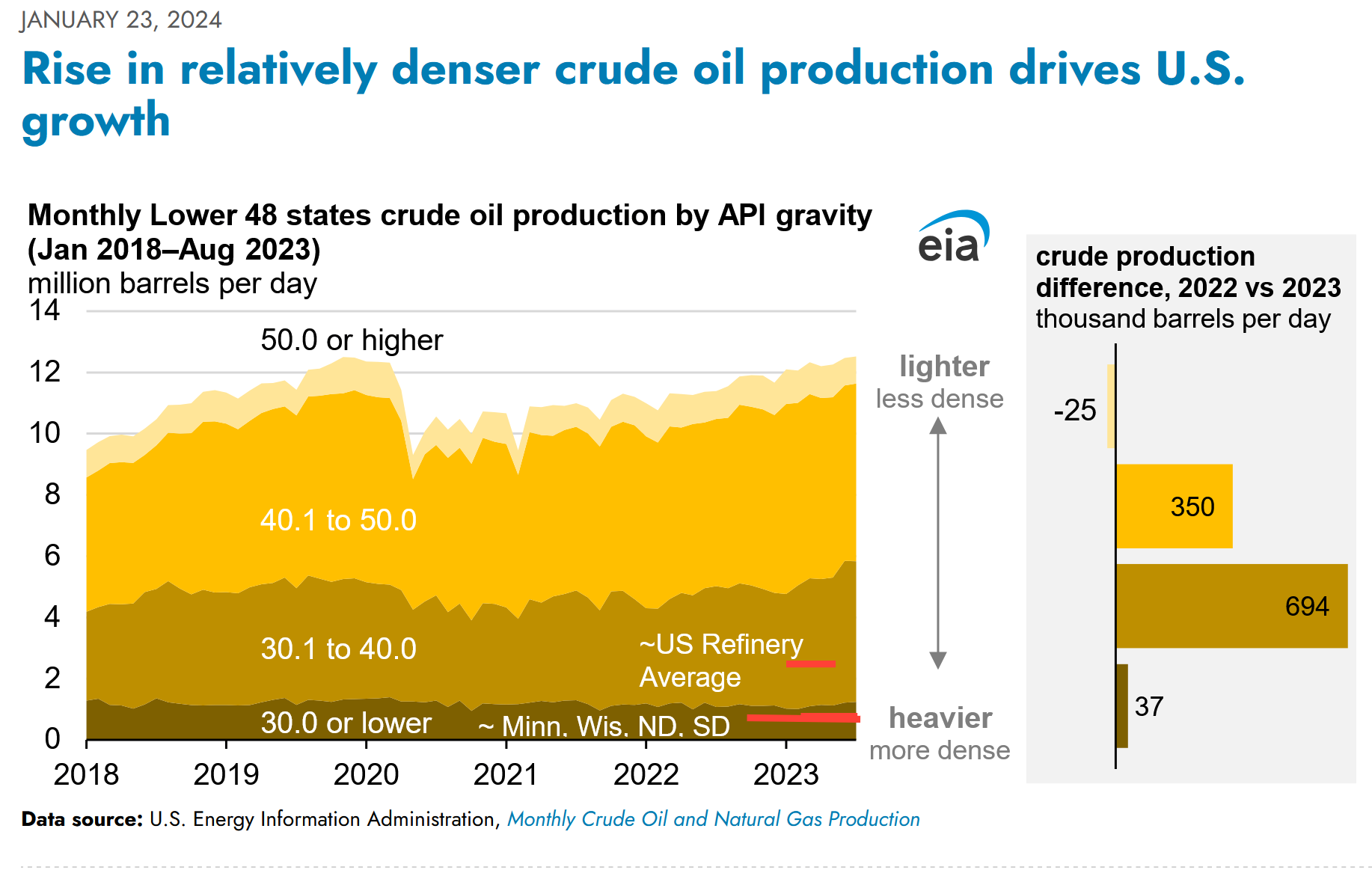
On average, refiners in the U.S. like API oil of around 33. That means 80% + of US production in the lower 48 is too light, by itself, for the average crude supplied to refineries.
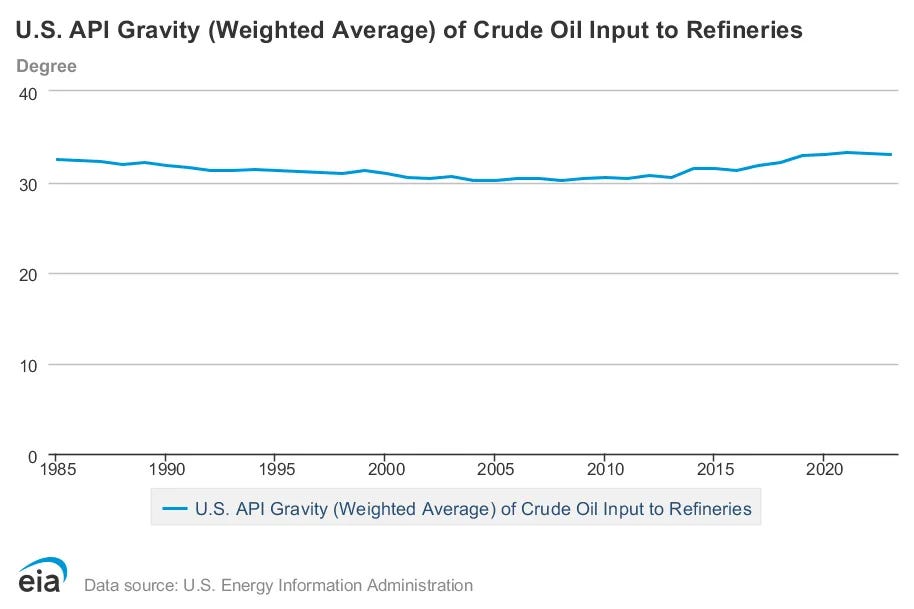
If we travel up to the refineries in Minnesota, Wisconsin, North and South Dakota, they like even heavier oil. On average, they run around 28 API. That means that 90%+ of US oil production is lighter than the type of oil those refineries like to digest.
So, how do we fix this mismatch? Once again, it’s US and Canadian energy interdependence. Canada ships oil (both light and heavy ) to the US. Canadian heavy oil balances the light U.S. oil for the right average crude grade. In fact, heavy bitumen from the oil sands is very ‘sluggish’ and has to be diluted. So, Canada buys some very light petroleum products from the US that Canada mixes with the heavy stuff to make it flow better. Then, it’s sold back to the USA in the form of heavy (synthetic) oil.
So what will happen if Canada and Trump can’t agree and tariffs get imposed? This isn’t to suggest that tariffs will get permanently imposed. But let’s run through the options and trade-offs.
If 25% tariffs are imposed on Canadian oil, it’s almost certain that consumers will pay more at the pump. Why? Because Canadian producers have the option to sell some oil on the recently expanded Trans Mountain pipeline that connects Alberta and BC to the Pacific coast and with it, global markets ( but only up to a certain point). And, Canadian crude oil, heavy oil in particular, often sells at a steep discount to US oil. Meaning producers won’t be happy with another 25% reduction in revenues. So, they’d likely only sell if U.S. customers picked up at least part of the tab.
Yes, US refineries could in theory switch to avoid the higher priced oil. However, refinery owners won’t want to invest that kind of long-term money in fixing a short-term problem. Plus, there would have to be a major re-working of pipeline capacity to the Midwest, or the closure of Midwest oil refiners.
The US used to import a lot of heavy oil from Venezuela. In fact, Venezuela has vast oil sands, similar to - but far larger than - Alberta’s oil sands. Despite this extremely rich natural resource, corruption in Venezuela’s socialist government and the deterioration of relations with the US resulted in Canada replacing virtually all of those Venezuelan crude imports.
You could get some heavy oil in Iraq. Or you could go to California. But good luck getting California to drill baby drill any time soon!
The bottom line is that few good substitutes exist for Canadian heavy oil. Ultimately, the areas impacted the most could be the very same Midwest swing States that President Trump campaigned so hard to win in 2024. And Trump also made his campaign about reducing energy costs and curbing inflation. Raising the prices on the US’s largest foreign oil supplier would do the opposite. And let’s not forget that Vice President JD Vance hails from one of those Midwest states. If Vance wants to run for President in 2028, he’ll want to keep those Midwest voters happy.
And Trump has surrounded himself with some extremely energy-smart people, including Chris Wright, Trump’s energy pick. Wright, an engineer, is a founder and the CEO of Liberty Energy. As one of the largest oilfield service providers in both the US and Canada, Liberty completes ~ 20% of all North America onshore oil and gas wells. Let’s put it this way: Wright understands the nuts and bolts of the oil industry.
So it’s highly likely that senior people in the Trump White House understand this reality: there isn’t a good substitute for Canadian heavy oil. If tariffs are actually applied, the US would have to exempt Canadian oil or likely see domestic oil prices rise.

In negotiations, knowing what the other party wants and understanding the possible outcomes can go a long way in resolving disputes. Tariffs certainly might create leverage in negotiating a border security deal. However, rising oil prices isn’t something that Trump wants - border security is. Of course, all of this comes to a head when Trudeau is on his way out and we really don’t know who’ll take the helm in Canada. So we’ll have to see how this shakes out.
That’s all for now. Thanks for reading!
Well written and educational! Let's just make Canada the 51st State.
Great piece. It’s imperative that everyone, especially the Administration, understand the potential downside of tariffs on Canadian oil. There’s certainly enough other Canadian imports to impose tariffs on in order to push them to tighten our northern border.